

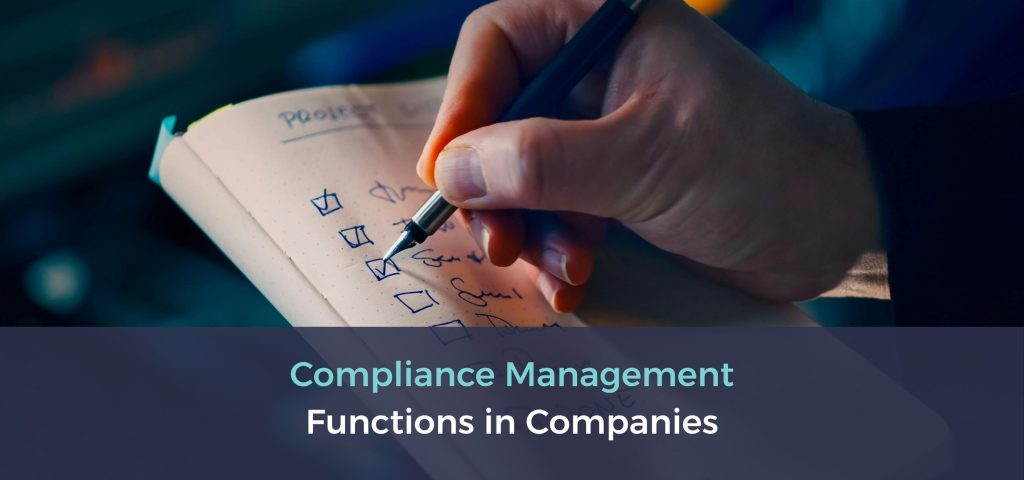
Compliance management functions in companies are considered one of the fundamental pillars for protecting institutions from regulatory and legal risks, as this department works to ensure the company’s compliance with applicable laws, regulations, instructions, and controls, in addition to developing internal policies and procedures that help reduce violations and enhance integrity and governance.
The role of compliance management is not limited to detecting violations after they occur, but extends to preventing them, anticipating sources of risk, and monitoring regulatory changes that may affect the company’s operations.
The importance of compliance management increases with the expansion of companies and the diversity of their activities and transactions, especially in sectors subject to advanced regulatory and supervisory requirements.
Through an effective compliance system, the company can improve its internal practices, reduce exposure to fines and penalties, and enhance the trust of clients, investors, and regulatory authorities.
In today’s article, we review everything you want to know about compliance management functions in companies, in addition to answering a set of related frequently asked questions.
Compliance Management Functions in Companies
Compliance management functions in companies include a wide range of responsibilities aimed at ensuring the compatibility of the institution’s activities, decisions, and procedures with regulatory and legal requirements.
The nature of these functions varies according to the size of the company, its sector, and the regulatory authority to which it is subject, but there is a set of core responsibilities shared by most compliance departments.
Compliance management functions in companies are as follows:
Monitoring Compliance with Laws and Regulations
Compliance management monitors the extent of the company’s compliance with laws and regulations, identifies new requirements, and works to align policies and procedures with them.
Identifying Non-Compliance Risks
The department identifies non-compliance risks, such as fines, losses, disputes, and reputational damage, and develops appropriate plans to mitigate them.
Preparing and Updating Compliance Policies
The department establishes the policies and procedures necessary for compliance, and reviews and updates them in line with regulatory changes and emerging risks.
Monitoring Compliance within the Company
The department monitors the implementation of policies and controls, detects cases of non-compliance, and raises results and recommendations to the competent authorities.
Providing Advice to Various Departments
Compliance management provides advice to departments when making decisions or launching products and services, with the aim of identifying requirements and risks early.
Monitoring Regulatory Changes
The department monitors amendments to laws and instructions, assesses their impact on the company’s operations, and coordinates to implement the required changes.
Investigating Cases of Non-Compliance
The department studies violation cases, analyzes their causes and shortcomings, and provides appropriate recommendations to address them and prevent recurrence.
Spreading a Culture of Compliance
The department works to promote a culture of compliance through training and awareness, and by introducing employees to policies and risks associated with violations.
Managing Conflicts of Interest
The department establishes controls for disclosing and addressing conflicts of interest in a manner that preserves the integrity of decisions and the interests of the company and related parties.
Combating Fraud and Irregular Practices
The department contributes to establishing controls to reduce fraud and violating practices, and monitoring indicators of suspicion and mechanisms for reporting violations.
Preparing Compliance Reports
The department prepares periodic reports showing the level of compliance, risks, violations, and corrective actions, to support senior management decisions.
Following Up on Corrective Actions
The department follows up on the implementation of actions necessary to address violations and their causes, and verifies the effectiveness of solutions and the prevention of recurrence of the problem.
The Importance of Compliance Management in Companies
Compliance management contributes to building a more disciplined business environment capable of dealing with regulatory risks. When compliance requirements are clear and effectively implemented, the company becomes more capable of avoiding violations and reducing their potential effects.
Institutional compliance also helps to:
- Reduce the risks of regulatory fines and penalties.
- Protect the company’s reputation and client trust.
- Improve the quality of internal policies and procedures.
- Support the principles of governance and integrity.
- Enhance oversight of operations.
- Raise employee awareness of regulatory responsibilities.
- Detect risks and violations at early stages.
- Support senior management in making more risk-aware decisions.
The Difference Between Compliance Management, Risk Management, and Internal Audit
Despite the close relationship between these functions, each has a different role within the company.
Compliance management focuses primarily on ensuring that the company’s operations are compatible with relevant laws, regulations, instructions, and internal policies.
Risk management, on the other hand, is concerned with identifying and analyzing the various types of risks that the company may face, whether financial, operational, strategic, or regulatory, and developing appropriate methods to manage them.
Internal audit focuses on providing independent and objective assurance regarding the efficiency and effectiveness of governance, risk management, and internal control processes, in accordance with the approved audit scope and mandates.
Therefore, these functions complement one another, and the existence of an effective compliance department does not mean dispensing with risk management or internal audit.
How Does Compliance Management Work Efficiently?
The efficiency of compliance management depends on a clear framework that defines responsibilities and requirements, along with risk monitoring, performance measurement, and continuous awareness enhancement.
- Establishing a clear compliance framework: Identifying the laws and regulations to which the company is subject and linking them to internal policies and procedures.
- Periodically assessing compliance risks: Continuously monitoring risk areas and directing resources toward the aspects most in need of treatment.
- Using performance measurement indicators: Monitoring violations, non-compliance cases, corrective actions, and the level of training and awareness.
- Enhancing the independence of compliance management: Enabling the department to perform its duties objectively and raise its reports to the appropriate administrative level.
- Relying on continuous awareness: Continuously training employees on compliance requirements, especially when laws and policies are updated.
The Most Prominent Challenges Facing Compliance Management
Compliance departments may face a number of challenges, most notably the abundance of regulatory requirements and their constant change, the multiplicity of regulatory authorities, the overlap of responsibilities between departments, and the weak awareness of some employees about the importance of compliance.
Reliance on manual procedures and data fragmentation may also represent a challenge for the department, especially in large companies.
Therefore, modern technologies, data analysis tools, and automation can help improve monitoring and detect cases of non-compliance more quickly.
The Role of Compliance Management in Enhancing Governance
Compliance management is closely linked to the principles of good governance, as it helps establish a clear framework for responsibilities, authorities, and controls that govern the company’s operations.
The existence of clear policies for disclosure, conflicts of interest, reporting violations, and compliance with laws also contributes to enhancing transparency and accountability, and limits practices that may expose the company to legal or regulatory risks.
Compliance Management Functions in Companies from CLA
CLA helps companies enhance their compliance system and reduce risks associated with non-compliance with laws and regulations, through a range of professional services that include tax and zakat compliance, reviewing regulatory obligations, preparing and reviewing declarations and submitting them within the specified deadlines, in addition to providing tax and zakat consultations and supporting companies in risk management and dealing with inspection and audit procedures.
CLA’s services also include supporting institutions in value-added tax and indirect taxes, transfer pricing, international taxation, and tax and zakat dispute settlement, which helps companies improve compliance procedures and reduce the likelihood of violations and fines.
Frequently Asked Questions About Compliance Management Functions in Companies
What is meant by compliance management in companies?
Compliance management is the function responsible for helping the company ensure that its operations, activities, and policies are compatible with relevant laws, regulations, instructions, regulatory controls, and internal policies.
What are the most important compliance management functions in companies?
The most prominent functions include monitoring laws and regulations, identifying non-compliance risks, preparing policies, monitoring compliance, providing advice, awareness and training, investigating cases of non-compliance, preparing reports, and following up on corrective actions.
Is compliance management responsible for all risks in the company?
No, compliance management focuses on the risks of non-compliance with relevant laws, regulations, and policies, while risk management deals with a broader scope of risks that the company may face.
What is the difference between compliance and internal audit?
Compliance focuses on helping the company fulfill regulatory and legal requirements and internal policies, while internal audit provides an independent and objective assessment of the effectiveness of governance, risk management, and internal control.
Do small companies need a compliance department?
Not every small company may need an independent department with the same structure as in large companies, but the need to define compliance responsibilities and monitor laws, regulations, and policies remains, and this function can be organized in a manner proportionate to the company’s size and the nature of its activity.
اقرأ ايضًا : ما هو رقم ضريبة القيمة المضافة وكيفية استخدامه