

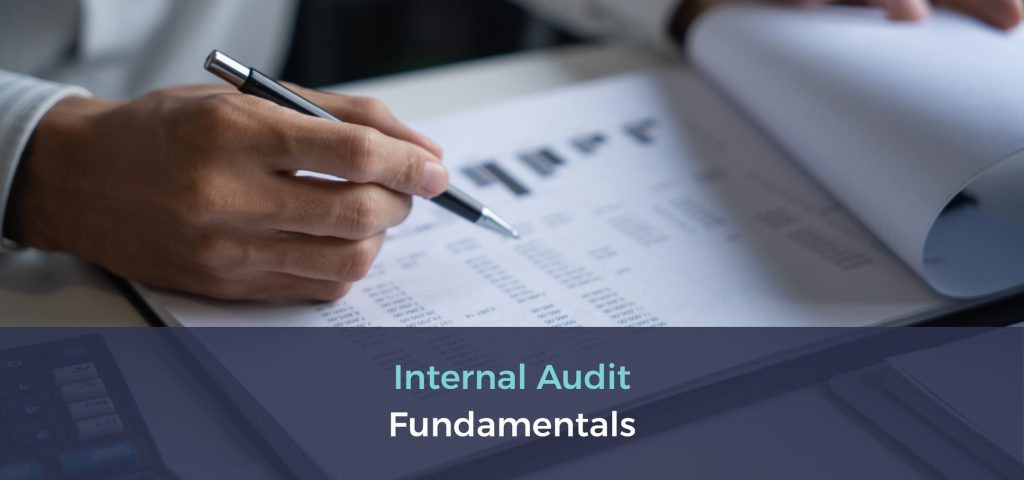
Internal audit fundamentals represent a set of principles and practices that help organizations evaluate the effectiveness of control systems, risk management, and governance, and ensure that operations and procedures are proceeding in accordance with approved policies and objectives.
Internal audit is one of the important functions that helps management and the board of directors identify deficiencies, improve performance, and mitigate risks.
With the expansion of business and the increasing complexity of financial, administrative, and technical operations, internal audit is no longer limited to detecting errors; it has become a means to support management, improve operations, enhance internal control efficiency, and strengthen governance within the organization.
What are Internal Audit Fundamentals?
Internal audit fundamentals refer to the principles and procedures upon which the internal audit function within an organization is based.
This function aims to provide assurance and consulting services in an independent and objective manner that helps the organization achieve its objectives and improve its operations.
Internal audit views the organization comprehensively; it is not limited to accounts and financial statements but can include operational processes, risk management, compliance, information security, governance, and resource utilization efficiency.
Audit work is carried out according to a plan based on the organization’s actual risks, objectives, and needs.
What is the Importance of Internal Audit?
Internal audit helps organizations understand the risks that may affect the achievement of their objectives, and provides management and the board of directors with insights and recommendations that help improve performance and control.
Key benefits include:
- Risk management: Identifying risks and evaluating measures taken to address them.
- Enhancing control: Assessing the effectiveness of internal controls and procedures.
- Improving operations: Identifying deficiencies and suggesting opportunities for improvement.
- Supporting governance: Contributing to enhancing transparency and accountability.
- Raising efficiency: Identifying waste and improving resource utilization.
- Supporting compliance: Assessing adherence to systems, policies, and procedures.
- Protecting assets: Helping to reduce the risks of misuse of assets or resources.
- Supporting management: Providing information and analyses that assist in decision-making.
What are the Objectives of Internal Audit?
The objectives of internal audit vary according to the nature of the organization and its risks, but there is a set of fundamental objectives, the most important of which include:
Evaluating Internal Control
Internal audit examines controls and procedures to determine their ability to prevent, detect, and address errors in a timely manner.
Assessing Risk Management
Internal audit is concerned with ensuring the existence of an appropriate methodology for identifying, analyzing, and monitoring risks, and its alignment with the organization’s objectives.
Supporting Governance
Internal audit contributes to improving decision-making, oversight, and accountability mechanisms, thereby supporting the governance environment within the organization.
Improving Operational Efficiency
Auditing is not limited to discovering problems; it also aims to identify opportunities for improving procedures and reducing waste and unnecessary costs.
Enhancing Compliance
The internal audit function reviews the extent of departments’ adherence to internal policies and procedures and relevant regulatory requirements.
What are the Fundamental Principles of Internal Audit?
Effective internal audit is based on a set of principles that help ensure the quality and objectivity of the work.
Key principles include:
- Independence: The internal audit activity must be able to perform its responsibilities without interference affecting its objectivity.
- Objectivity: Relying on evidence and facts when evaluating operations and controls.
- Integrity: Committing to professional conduct and handling information responsibly.
- Professional competence: Possessing appropriate knowledge and skills to perform audit tasks.
- Confidentiality: Protecting information accessed during audit work.
- Methodology: Executing audit work according to a clear plan and procedures.
- Risk focus: Directing resources toward the most important and impactful areas.
Types of Internal Audit
Internal audit can take multiple forms according to the area being examined.
Financial Audit
Focuses on financial operations, accounts, financial data, and related controls, helping to detect errors and weaknesses in financial procedures.
Operational Audit
Aims to evaluate the efficiency and effectiveness of operational processes and the extent to which they achieve set objectives.
Compliance Audit
Tests the organization’s adherence to applicable systems, regulations, policies, and procedures.
Information Technology Audit
Focuses on technical systems, information security, access management, data protection, and systems continuity.
Risk Management Audit
Concerned with assessing methodologies for identifying, measuring, responding to, and monitoring risks.
Governance Audit
Examines the effectiveness of governance frameworks, oversight, accountability, and decision-making mechanisms within the organization.
Steps of Internal Audit
The internal audit engagement goes through a set of organized stages, the details of which vary according to the nature of the engagement and the size of the organization.
1. Planning
The engagement begins by determining the objective, scope, and area to be examined, with an understanding of the nature of the activity, processes, and associated risks.
2. Risk Assessment
Key risks that may affect the achievement of the objectives of the process or department under audit are identified.
3. Preparing the Audit Program
Testing procedures, required evidence, samples, and documents to be examined are determined.
4. Performing Audit Procedures
The audit team collects evidence, analyzes data, examines documents, and conducts necessary interviews and tests.
5. Analyzing Results
Results are compared with established policies, procedures, standards, and objectives, then deficiencies and risks are identified.
6. Preparing the Report
Audit results are presented in a report containing observations, impacts, and recommendations, according to the nature of the engagement.
7. Follow-up
Implementation of recommendations is monitored, ensuring that appropriate corrective actions are taken and identified observations are addressed.
What are the Tools of Internal Audit?
The internal auditor uses a variety of tools and methods to gather evidence and analyze processes, the most prominent of which include:
- Document examination: Reviewing contracts, invoices, records, and documents.
- Interviews: Obtaining information from employees and officials.
- Observation: Directly monitoring the implementation of processes.
- Sampling tests: Examining a sample of transactions instead of reviewing all transactions when appropriate.
- Data analysis: Using data to identify patterns and exceptions.
- Control tests: Assessing whether controls are operating as designed.
- Comparison: Comparing results with approved indicators, objectives, and policies.
What is Meant by Risk and Control in Internal Audit?
The relationship between risk and control is one of the most important internal audit fundamentals.
Risks are events or circumstances that may negatively affect the organization’s ability to achieve its objectives, while controls represent the procedures and policies put in place to address these risks and mitigate their effects.
For example, if there is a risk of unauthorized access to data, one of the controls used may be implementing multi-factor authentication and periodically defining and reviewing user permissions.
The internal auditor assesses whether controls are appropriate for the risks and whether they are operating effectively.
How Does Internal Audit Contribute to Improving Company Performance?
Internal audit can transform from a function focused on error detection to an important partner in performance improvement when it relies on risk assessment and provides practical, actionable recommendations.
For example, the audit may reveal unnecessary steps in a process, weaknesses in the distribution of authorities, delays in transaction processing, or a lack of certain controls. By providing appropriate recommendations, management can improve the process, reduce risks, and raise efficiency.
Internal Audit Fundamentals from CLA
The internal audit fundamentals from CLA Saudi Arabia are based on following an independent and objective methodology aimed at examining and evaluating the organization’s activities and operations, measuring their efficiency and effectiveness, in addition to verifying compliance with applicable policies, procedures, systems, and regulations.
Internal audit focuses on evaluating internal control systems and risk management to ensure the existence of effective controls operating as required, helping management and stakeholders make more accurate and reliable decisions, improve performance, and reduce operational and administrative risks.
CLA’s internal audit also includes providing assurance and consulting services that contribute to enhancing governance, improving operational efficiency, and supporting management in proactively identifying and addressing weaknesses and risks.
Frequently Asked Questions About Internal Audit Fundamentals
What is meant by internal audit?
Internal audit is an independent and objective function that provides assurance and consulting services aimed at helping to evaluate and improve risk management, control, governance, and operations within the organization.
What are the most important objectives of internal audit?
Among its most important objectives are evaluating internal control, risk management, supporting governance, improving operational efficiency, and enhancing compliance with relevant policies and systems.
Is internal audit limited to accounts?
No, internal audit can include financial, operational, technical, administrative, compliance, risk management, and governance aspects, according to the nature of the organization and the audit plan.
What is the difference between the internal auditor and the external auditor?
The internal auditor focuses more broadly on risks, control, governance, and process improvement, while the external auditor, in a financial audit engagement, focuses on expressing an independent opinion on the financial statements in accordance with the applicable accounting framework.
What are the most important skills of the internal auditor?
Among the most important skills are analytical thinking, critical thinking, objectivity, communication, attention to detail, professional knowledge, and the ability to assess risks and controls.
In conclusion, internal audit fundamentals represent the starting point for understanding the role of this function in modern organizations.
Internal audit is not limited to reviewing accounts or detecting errors, but includes assessing risks, control, governance, operations, and compliance, and providing recommendations that help management improve performance.
The effectiveness of internal audit increases when it enjoys independence and objectivity, relies on evidence and data, directs its efforts toward higher-risk areas, and follows up on the implementation of recommendations while measuring their impact.
READ ALSO : external audit reports