

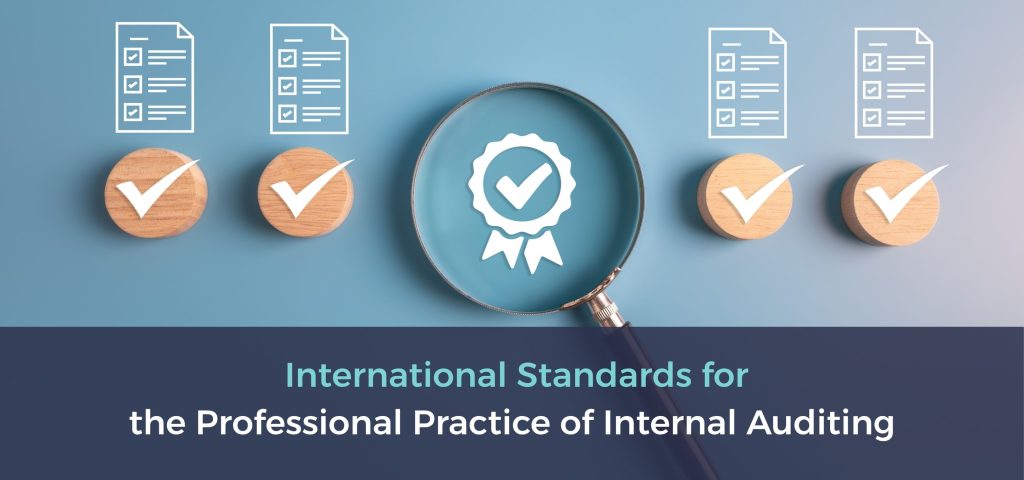
The International Standards for the Professional Practice of Internal Auditing represent a professional framework that helps internal audit departments carry out their work in an organized and reliable manner, thereby enhancing the quality of review, oversight, risk management, and governance within organizations.
These standards help unify professional practices, raise the competence of internal auditors, and improve the ability of the internal audit function to deliver real value to management and stakeholders.
In the following lines, we provide you with a range of information about the International Standards for the Professional Practice of Internal Auditing, along with an overview of some of CLA’s services.
What Are the International Standards for the Professional Practice of Internal Auditing?
The International Standards for the Professional Practice of Internal Auditing are a set of professional requirements and principles that regulate the practice of internal auditing and define the foundations upon which the internal audit function within an organization should be based.
The Institute of Internal Auditors (IIA) has developed a global professional framework for internal auditing, and its Global Internal Audit Standards have become an important reference for modern professional practices.
These standards aim to clarify the responsibilities of the internal audit function, enhance its independence and objectivity, improve the quality of its work, and help internal auditors assess risks, controls, and governance in a systematic manner.
The Importance of the International Standards for the Professional Practice of Internal Auditing
The importance of the International Standards for the Professional Practice of Internal Auditing increases as organizations expand, operations become more complex, and the volume of risks that may affect the achievement of objectives rises.
Key benefits of adhering to these standards include:
- Enhancing Audit Quality: Providing a clear methodology for executing internal audit tasks.
- Strengthening Independence: Supporting the internal auditor’s ability to perform duties objectively, free from undue influence.
- Improving Risk Management: Helping the organization identify significant risks and assess related controls.
- Supporting Governance: Providing assessments and information that help the board and senior management improve governance.
- Increasing Confidence: Enhancing stakeholder trust in the results of internal audit work.
- Standardizing Practices: Providing a common professional foundation applicable across organizations and sectors.
- Improving Performance: Identifying deficiencies, opportunities for improvement, and recommending appropriate corrective actions.
Objectives of the International Standards for the Professional Practice of Internal Auditing
The standards seek to achieve a set of professional and organizational objectives, the most important of which are:
- Organizing the Internal Audit Function: Helping define the nature of the internal audit function, its responsibilities, and its relationship with the board, executive management, and other departments.
- Promoting Objectivity and Independence: Emphasizing the need for internal auditors to perform their work objectively, without personal interests or administrative pressures affecting their professional judgments.
- Improving Risk Management and Control: Contributing to the assessment of the effectiveness of risk management, control, and governance processes, and identifying areas needing improvement.
- Developing Audit Quality: Establishing clear foundations for planning, executing, documenting, communicating results, and following up on corrective actions.
What Do the International Standards for the Professional Practice of Internal Auditing Cover?
The modern standards for internal auditing are based on a set of principles and requirements that cover various aspects of the audit function—from the purpose of internal auditing and governance to service delivery and quality assessment.
Key areas covered include:
- The Purpose of Internal Auditing: Internal auditing aims to enhance the organization’s ability to achieve its objectives by providing independent, objective, risk-based assurance and consulting services.
- Ethics and Professionalism: The standards focus on the professional conduct of auditors, including integrity, objectivity, competence, due professional care, and confidentiality.
- Governance of the Internal Audit Function: Relates to the organization of the relationship between the chief audit executive, the board, and senior management, and defining the necessary authorities and responsibilities for effective performance.
- Managing the Internal Audit Function: Includes strategic and annual planning, resource allocation, performance management, stakeholder communication, and ensuring alignment of audit work with organizational objectives.
- Delivering Internal Audit Services: Includes defining the scope and objectives of the engagement, gathering and analyzing information, assessing risks and controls, documenting work, and communicating results and recommendations.
Core Principles of Internal Auditing
Modern professional practice is built on a set of principles that help the internal audit function achieve its objectives, the most important of which are:
- Demonstrating Commitment to Integrity: Internal auditors must exhibit professional conduct and integrity in all their work.
- Maintaining Objectivity: Professional judgments should be made impartially, and conflicts of interest should be avoided.
- Demonstrating Professional Competence: Auditors need to possess the necessary knowledge and skills to perform their work effectively.
- Exercising Due Professional Care: Audit work should be carried out with appropriate diligence and attention, commensurate with the nature of the engagement and the level of risk.
- Maintaining Confidentiality: Information obtained during audit work must be handled responsibly and not used inappropriately.
- Organizational Independence: The internal audit function needs an organizational position that allows it to fulfill its responsibilities without undue interference.
Internal Auditor Responsibilities Under Professional Standards
Internal auditors perform a range of tasks that vary depending on the nature of the organization and the scope of the audit function. The most prominent include:
- Assessing the effectiveness of internal control systems.
- Reviewing financial and operational processes and procedures.
- Evaluating risks affecting the organization’s objectives.
- Examining compliance with policies, systems, and regulations.
- Analyzing data and information related to operations.
- Identifying deficiencies and areas for improvement.
- Providing appropriate recommendations.
- Following up on the implementation of corrective actions.
- Submitting professional reports to the relevant authorities.
The role of internal auditing does not mean that the auditor is responsible for managing risks or operating controls on behalf of management; the primary responsibility for managing the organization, its risks, and controls rests with management and the relevant governing bodies.
International Standards for the Professional Practice of Internal Auditing and Risk Management
There is a close relationship between internal auditing and risk management, as internal auditing can provide an independent assessment of the effectiveness of risk management processes and associated controls.
For example, the internal auditor may review:
- The existence of a clear risk management methodology.
- The accuracy of risk identification and classification.
- The effectiveness of controls used to address risks.
- The extent to which high-risk areas are monitored.
- The quality of reports submitted to management.
- The alignment of risks with the organization’s strategic objectives.
Challenges Facing the Application of the International Standards for the Professional Practice of Internal Auditing
Organizations may face some difficulties when applying the standards, especially if the internal audit function is new or resource-constrained.
Key challenges include:
- Skill Gaps: The organization may need to develop auditors’ skills or recruit specialized expertise.
- Limited Independence: Inappropriate organizational reporting lines may affect the objectivity of the audit function.
- Resource Constraints: The number of auditors or available tools may not match the organization’s size and risk profile.
- Data Quality Issues: Data quality affects auditors’ ability to analyze processes and risks and draw conclusions.
- Resistance to Change: Some departments may find it difficult to accept observations and recommendations or implement corrective actions.
CLA’s Internal Audit Standards Services
CLA Saudi Arabia provides internal audit services based on an independent and structured methodology, aiming to assess the efficiency and effectiveness of operations and internal controls, verify compliance with established policies, procedures, and regulations, and help organizations enhance risk management, raise internal control efficiency, and support decision-making.
Frequently Asked Questions About the International Standards for the Professional Practice of Internal Auditing
What is meant by the International Standards for the Professional Practice of Internal Auditing?
They are a set of professional principles and requirements that regulate the practice of internal auditing and help carry out its work in a professional and systematic manner, with a focus on governance, risk management, control, and quality of performance.
Who issues the International Standards for the Professional Practice of Internal Auditing?
The Institute of Internal Auditors (IIA) issues the Global Internal Audit Standards, which are part of the international professional framework guiding the practice of internal auditing.
Why is it important to apply the International Standards for the Professional Practice of Internal Auditing?
Applying them helps improve the quality of audit work, enhance the independence and objectivity of auditors, support the assessment of risk, control, and governance, and raise the level of confidence in the internal audit function.
Are the International Standards for the Professional Practice of Internal Auditing mandatory?
The mandatory nature varies depending on the country, sector, regulatory bodies, and organizational requirements. Organizations should review local laws, regulations, and relevant professional requirements to determine applicable obligations.
What is the difference between internal auditing standards and external auditing?
Internal auditing focuses on providing assessments and services that help the organization improve governance, risk management, control, and operations, while external auditing operates independently to express a professional opinion within the scope and requirements of the engagement, most notably concerning financial statements.
We have now reached the end of our article, during which we have presented a diverse range of information about the International Standards for the Professional Practice of Internal Auditing. Feel free to reach out to us at CLA to benefit from our distinguished services.
READ ALSO: Enterprise Risk Management – Concept, Importance, Key Stages, and Applications