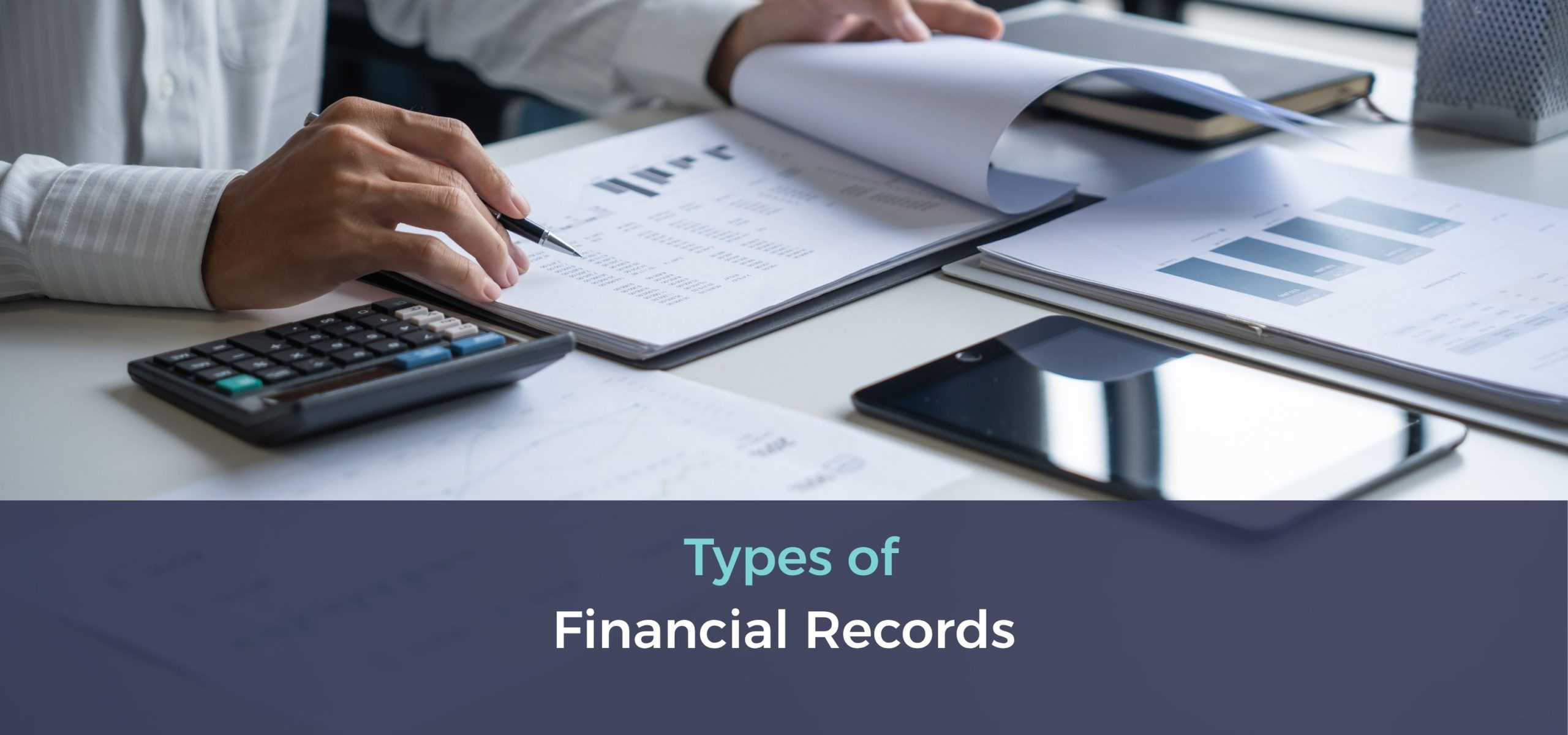



Types of financial records are among the most important tools that companies and establishments rely on to organize their financial transactions, monitor the flow of money, and accurately document accounting operations.
These records help provide clear information about revenues, expenses, assets, liabilities, and other data that management needs to make sound financial decisions. They also serve as a critical foundation for preparing reports and financial statements and for complying with accounting and tax requirements.
As business volume grows and the number of daily transactions increases, the need for well-organized financial records becomes even more important.
They help reduce errors, improve internal control, facilitate account audits, and provide a clearer picture of the organization’s financial performance.
In today’s article, we will review everything you need to know about types of financial records, along with answers to some frequently asked questions on the topic.
Types of Financial Records
Upon researching types of financial records, we found that they vary depending on the nature and size of the business and its accounting system However, there is a set of basic records widely used in accounting and business management.
The main types of financial records include:
Sales Register: The sales register is used to document transactions related to selling products or providing services to customers. It typically includes invoice data, sale dates, amounts, customer details, and payment methods. This register helps track total sales over different periods and provides data useful for preparing financial reports and analyzing business performance.
Purchases Register: This register records all purchases of goods, materials, or services that the organization needs to carry out its activities. It may include invoice number, purchase date, supplier name, transaction value, and payment method. Its importance lies in helping the organization track purchasing costs and obligations to suppliers, as well as facilitating invoice reconciliation with entries in the accounting system.
Expenses Register: The expenses register is dedicated to documenting the expenditures incurred by the organization during its operations, such as rent, salaries, utilities, transportation, marketing, and administrative and operational expenses. Organizing this data helps determine the volume and classification of expenses, compare them with revenues, and assess spending efficiency while identifying items that may need review or rationalization.
Cash Receipts and Payments Register: This register is used to track cash inflows and outflows, whether through sales and collections or through expenses and various payments. It is an important record for monitoring cash liquidity, helping to know the available balance, track daily cash operations, and reduce the likelihood of errors or discrepancies in the cash box.
Bank Register: The bank register helps document and monitor transactions conducted through the organization’s bank accounts, such as deposits, transfers, withdrawals, and bank payments. It is also used to perform bank reconciliations between accounting records and bank statements, helping to detect unrecorded transactions, errors, or balance discrepancies.
Fixed Assets Register: This register is dedicated to documenting assets used by the organization over long periods, such as buildings, equipment, machinery, vehicles, furniture, and devices. It typically includes asset data, acquisition date, cost, location, depreciation rate, and book value, helping manage assets and track their accounting value over the years.
Inventory Register: The inventory register is used to track quantities of products and materials in warehouses, recording receipts, issues, additions, transfers, and other movements. Its importance lies in providing accurate data on inventory levels, helping detect shortages or surpluses, reducing the risk of damage or loss, and improving purchasing and storage operations.
Salaries and Wages Register: This register contains data related to employee and staff wages, including basic salaries, allowances, deductions, bonuses, and other related elements. It helps organize payroll processes, document labor costs, and provide accurate data for preparing financial reports and employee-related accounts.
Customers Register: The customers register is used to track financial transactions related to customers, especially in organizations that rely on credit sales or service delivery with deferred payment. It helps identify amounts due from each customer and monitor collection processes, thereby improving accounts receivable management and cash flow.
Suppliers Register: The suppliers register documents financial transactions and obligations arising from dealing with suppliers, such as credit purchases, invoices, payments, and outstanding balances. It helps management know existing liabilities and payment due dates, while also facilitating account tracking and supplier balance reconciliation.
Why Are Financial Records Important for Organizations?
The importance of financial records goes beyond merely recording transactions; they play a fundamental role in financial management and performance oversight.
The importance of the various types of financial records can be summarized as follows:
- Providing Accurate Financial Data
Organized records continuously document financial operations, creating a database that can be referenced when transaction details or financial reports are needed. - Improving Decision-Making
Management relies on financial information when making many decisions regarding expansion, investment, costs, pricing, and spending. The more accurate and organized the data, the more reliable the decisions. - Enhancing Internal Control
Financial records help track and review transactions, enabling early detection of errors, discrepancies, and unusual activities, thereby strengthening control over the organization’s funds. - Facilitating the Preparation of Financial Statements and Reports
Accounting records serve as the primary source of data used in preparing financial statements and periodic reports, such as the income statement, balance sheet, and cash flow statement. - Supporting Financial and Tax Compliance
Maintaining organized financial records and documents helps document the organization’s transactions and provides the required data during audits or when preparing tax returns and related financial obligations.
What Is the Difference Between Financial Records and Financial Statements?
There is sometimes confusion between financial records and financial statements, although their functions differ. Financial records focus on documenting and recording transactions and financial operations in detail, such as sales, purchases, expenses, and collections.
Financial statements, on the other hand, are reports prepared using data recorded in the accounting books and records. Their purpose is to present the financial position, financial performance, and cash flows of the organization in an organized manner that helps management and stakeholders evaluate the activity.
Thus, financial records can be considered the primary source of data later used to prepare financial statements and reports.
How Can Financial Records Be Organized?
Organizing financial records requires following a set of practices that enhance data accuracy and ease of access. Most notably, transactions should be recorded continuously without delaying entry, supporting documents and invoices should be retained for each transaction, and revenues and expenses should be clearly classified.
It is also advisable to use an accounting system suitable for the nature of the business, set user permissions, conduct periodic reviews of accounts and records, create backup copies of financial data, and protect them from unauthorized access.
How to Choose the Right Financial Records for Your Business?
Not all organizations necessarily need the same number of records or the same level of detail.
Determining the appropriate records depends on the nature of the activity, transaction volume, sales and purchase size, the presence of inventory or fixed assets, and the method of dealing with customers and suppliers.
Therefore, it is best to design a record system that fits the organization’s needs, ensuring that the basic records needed to clearly and auditably document all financial transactions are in place.
CLA’s Services in Managing Financial Records
CLA Saudi Arabia offers specialized services in accounting and bookkeeping that help companies organize their financial transactions and maintain accurate, up-to-date records, including recording revenues, expenses, and other financial activities.
These services provide organized accounting data that can be relied upon in preparing reports and financial statements and supporting management decisions.
CLA also offers audit and assurance services that help enhance the reliability of financial information, verify its accuracy and completeness, and ensure compliance with relevant standards and regulations.

Frequently Asked Questions About Types of Financial Records
What is meant by financial records?
Financial records are a set of books or systems used by an organization to document and record financial transactions and operations that occur during a specific period, such as sales, purchases, expenses, receipts, and payments.
What are the most important types of financial records?
Among the most prominent are the sales register, purchases register, expenses register, cash receipts and payments register, bank register, inventory register, fixed assets register, salaries register, and customer and supplier registers.
Do financial records differ from one organization to another?
Yes, they vary according to the nature and size of the activity, the volume of transactions, and the work system. For example, a commercial enterprise may need detailed records for inventory, sales, and purchases, while a service-based organization that does not store products may have different needs.
Why is it important to record financial transactions promptly?
Continuous recording helps maintain data accuracy, reduces the likelihood of forgotten transactions or lost documents, and makes report preparation and financial review much easier.
Can financial records be managed electronically?
Yes, accounting systems and software can be used to manage financial records electronically. This can help organize data, speed up transaction recording, facilitate reporting, and streamline account monitoring, provided that appropriate controls are applied to protect data and maintain backup copies.
READ ALSO: Cybersecurity Risk Management.. Its Importance and Key Objectives