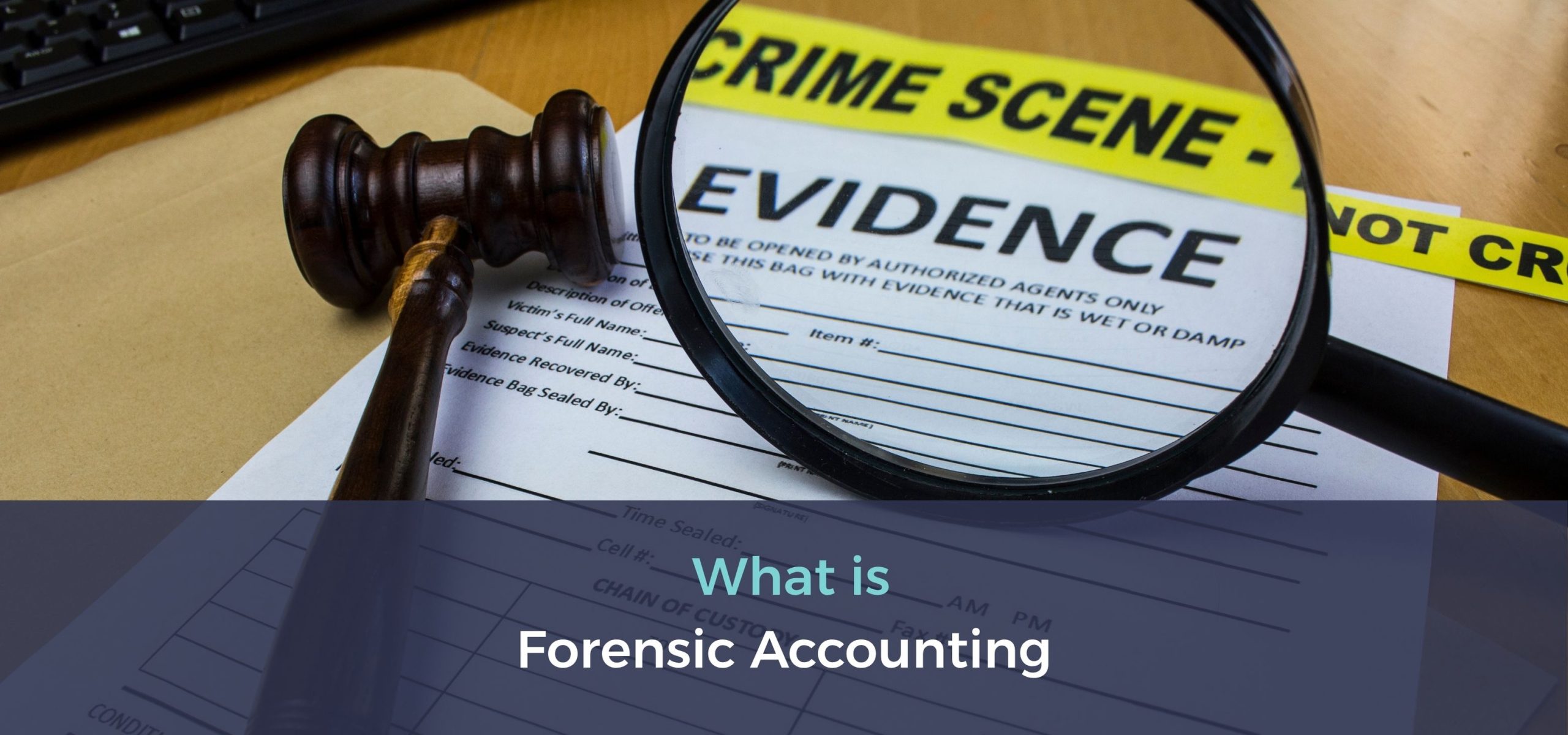



What is forensic accounting? is one of the questions that has become increasingly common recently, as people seek to understand the meaning of this term and how it can be used in various organizations.
With the growing complexity of financial operations and the expansion of business activities, forensic accounting has become an important tool for institutions seeking to protect their funds, detect financial risks, and verify the integrity of their transactions.
In today’s article, brought to you by CLA, we present a range of information answering the question what is forensic accounting, along with clarifying other frequently asked questions on the topic.
What is Forensic Accounting?
When searching for an answer to the question what is forensic accounting, we find that it is a professional specialization focused on investigating financial information, records, and transactions to identify violations, fraud, or financial manipulation, and to analyze related evidence to reach objective conclusions that can be presented to management, competent authorities, or used in legal proceedings when necessary.
The forensic accountant relies on a combination of accounting and analytical methods, along with an understanding of relevant legal procedures, to examine documents, accounts, and financial data and compare them with actual transactions.
The work may require tracing fund movements across multiple accounts or analyzing unusual transactions to uncover patterns that may indicate misconduct.
Thus, forensic accounting differs from traditional accounting in its fundamental purpose. While financial accounting focuses on recording, classifying transactions, and preparing reports and financial statements, forensic accounting places greater emphasis on investigation, analysis, and detecting indicators that may point to fraud or manipulation.
The Importance of Forensic Accounting
Forensic accounting gains significant importance due to its ability to handle cases that require in-depth financial analysis, especially when transactions are numerous or complex and violations are difficult to detect through routine auditing alone.
Its importance can be summarized as follows:
- Detecting Financial Fraud: Forensic accounting helps analyze financial transactions for abnormal patterns or inconsistencies that may indicate fraud, such as invoice manipulation, recording fictitious transactions, or concealing revenues.
- Tracing Funds and Transactions: A forensic accountant can track the movement of funds through various records, accounts, and transactions, helping to identify the source and destination of funds and link transactions together when there are indicators warranting investigation.
- Supporting Financial Disputes: In cases of disputes involving the value of money, assets, profits, or losses, forensic accounting can help analyze data, determine relevant financial values, and present findings based on available evidence and documents.
- Enhancing Internal Controls: The role of forensic accounting is not limited to detecting violations after they occur; investigation results can help identify weaknesses in financial and control systems, enabling the organization to improve procedures and reduce the likelihood of recurring violations.
What Are the Tasks of a Forensic Accountant?
The tasks of a forensic accountant begin with examining accounting records and ledgers, analyzing financial data and transactions, and reviewing invoices, contracts, and documents related to the case to detect any errors or unusual activities.
The forensic accountant also traces fund movements and financial transfers, searches for indicators of fraud or manipulation, estimates the scale of financial losses resulting from violations, and leverages available financial and electronic data to gain a clearer picture of the facts.
Finally, they prepare financial and analytical reports that present the findings of the examination and the evidence discovered, provide financial explanations to relevant parties, and assist in identifying weaknesses in the organization’s financial and control procedures.
Key Areas Where Forensic Accounting Is Used
Forensic accounting is applied in many fields that require financial analysis or investigation into suspicious transactions. The most prominent include:
- Fraud and Embezzlement Investigations: Used when there is suspicion of embezzlement of institutional funds, manipulation of expenses or revenues, or unauthorized use of company assets.
- Commercial Disputes: Forensic accountants can be called upon in disputes related to partnerships, investments, profits and losses, business valuations, or financial obligations.
- Compensation and Loss Claims: Forensic accounting may contribute to calculating financial losses resulting from certain events or disputes, based on available data and records.
- Company and Investment Audits: Forensic financial analysis can be used to examine certain operations or data when there are concerns about the accuracy of financial information or the integrity of transactions.
- Anti-Money Laundering: Analytical skills and the ability to trace financial flows can help identify unusual patterns and transactions that may warrant further examination under established frameworks and procedures.
What Is the Difference Between Forensic Accounting and Financial Auditing?
Financial auditing primarily aims to examine financial information and statements in accordance with specific audit standards and procedures to reach a professional conclusion about their compliance with the adopted accounting framework.
Forensic accounting, on the other hand, focuses on in-depth investigation and analysis when there is a case, suspicion, or dispute requiring a detailed understanding of financial flows and transactions. While the forensic accountant may benefit from audit procedures, they place greater emphasis on searching for, linking, and interpreting financial evidence.
What Skills Does a Forensic Accountant Need?
A forensic accountant needs a blend of accounting, analytical, and investigative skills. Knowledge of accounting alone is not sufficient to perform this role effectively.
Key required skills include:
- Financial Analysis: To understand data and detect unusual relationships and patterns.
- Critical Thinking: To evaluate information and avoid jumping to quick conclusions.
- Attention to Detail: To detect inconsistencies and subtle discrepancies.
- Accounting Knowledge: To understand entries, records, statements, and financial reports.
- Investigative Skills: To trace transactions and connect financial evidence.
- Report Writing: To present findings clearly and systematically.
- Professional Communication: To explain financial results to non-specialist parties.
- Use of Modern Technology: To efficiently analyze large volumes of financial data.
How Is a Forensic Accounting Investigation Conducted?
Investigation procedures vary from case to case, but the work typically begins by defining the scope of the engagement, objectives, and the information to be examined.
After that, relevant records, documents, and data are collected, then analyzed for inconsistencies or unusual transactions. In later stages, financial transactions may be traced and linked to supporting documents and related parties, followed by estimating the financial impact of the potential violation.
Finally, the results are documented and a report is prepared outlining the procedures performed and the conclusions reached, in accordance with the scope of the engagement and the available evidence.
What Are the Outputs of Forensic Accounting?
Outputs vary depending on the nature of the engagement but may include a report detailing the scope of work, procedures performed, data examined, and findings reached, along with analyses related to the transactions or financial losses under review.
The results should be clear and supported by available documents and data, with a clear distinction between established facts and professional conclusions, especially when the findings are linked to a dispute or legal proceeding.
CLA’s Services in Forensic Accounting
CLA Saudi Arabia offers specialized forensic accounting services that leverage expertise in accounting, auditing, and investigative techniques to help combat and reduce financial crime and fraud.
These services include investigating allegations of fraud and improper financial conduct within organizations, analyzing relevant financial information and data, and preparing comprehensive evidence-based reports.
CLA’s expertise also extends to matters related to financial cases and disputes, including preparing accounting reports for judicial authorities, supporting financial investigation efforts, and assisting with asset recovery – helping companies strengthen financial integrity and make decisions based on more reliable information.

Frequently Asked Questions About What is Forensic Accounting
Is forensic accounting only related to legal cases?
Not necessarily. It is used in legal cases and disputes, as well as within organizations to investigate fraud, financial violations, and evaluate internal controls.
Is a forensic accountant the same as a financial auditor?
No. An auditor examines financial statements in accordance with auditing standards, while a forensic accountant focuses on investigation, financial analysis, and tracing evidence and transactions.
What are the most important use cases for forensic accounting?
They include investigating fraud and embezzlement, tracing funds, analyzing financial disputes, estimating losses, and examining unusual transactions.
What are the core skills of a forensic accountant?
They need skills in accounting, financial analysis, critical thinking, investigation, transaction tracing, report writing, and data analysis.
Does forensic accounting help prevent fraud?
Yes. It helps identify weaknesses and analyze fraud methods, which supports the development of controls and procedures to reduce the recurrence of violations.
READ ALSO: Types of Financial Records and Their Importance in Organizing Accounts